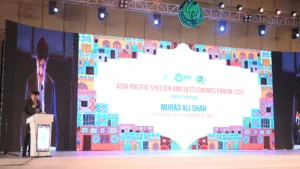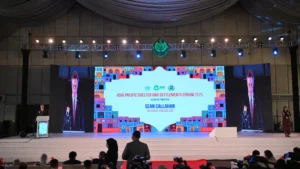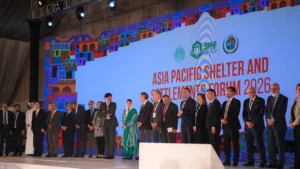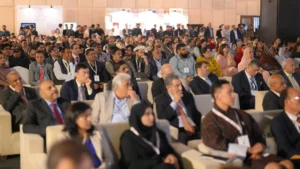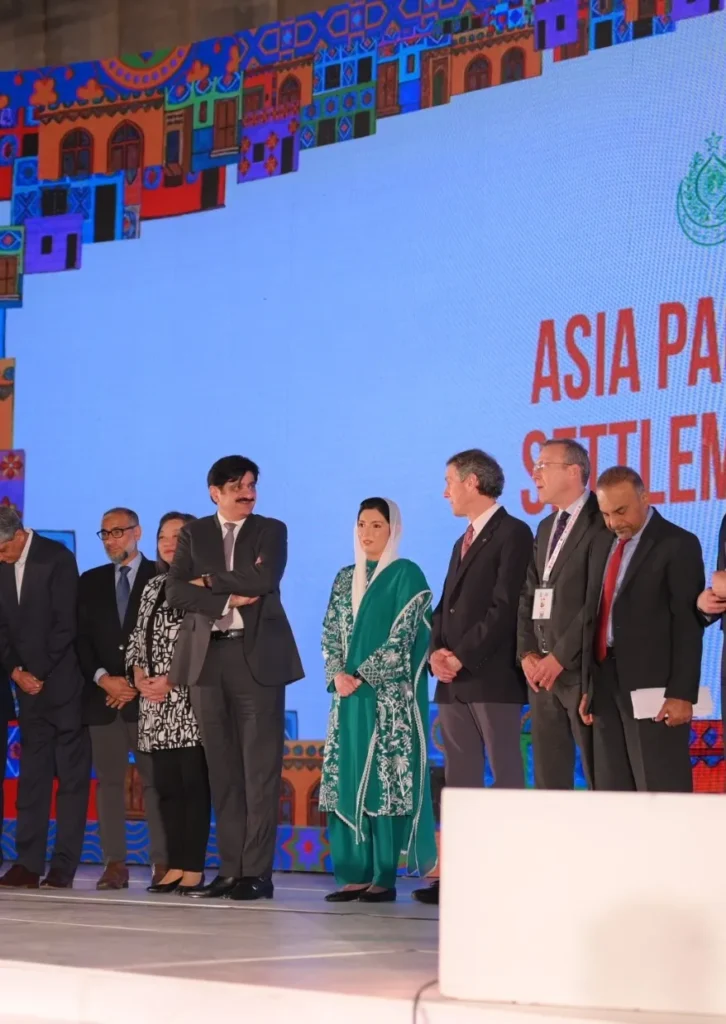
The Asia-Pacific Shelter & Settlements Forum (APSSF) 2026 brought critical conversations on climate resilience and inclusive housing to Karachi.
Hosted by the Government of Sindh through Sindh Peoples Housing for Flood Affectees, the forum convened over 600 delegates from 41 countries under the theme “Scaling Inclusive, Climate-Resilient Homes and Communities in a Nexus-Driven New Humanitarian World.” Global institutions including the World Bank, Asian Development Bank, UN-Habitat, UNICEF and the International Organization for Migration joined policymakers and practitioners to address post-disaster recovery and long-term settlement resilience.
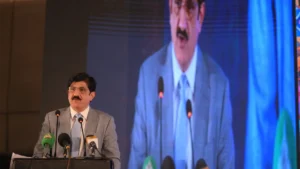
The opening ceremony was attended by Aseefa Bhutto Zardari, who emphasized the link between shelter, dignity, and women’s empowerment within recovery frameworks. Syed Murad Ali Shah, Chief Minister of Sindh, formally welcomed international delegates and highlighted the province’s post-2022 flood recovery model as a benchmark for climate-responsive housing.
We are proud to share that ADA’s Founder, Ar. Maria Aslam, contributed to a panel discussion focused on scaling climate-resilient settlement models and embedding community-led design within policy and reconstruction frameworks, reinforcing the role of architecture as a strategic tool in humanitarian recovery.
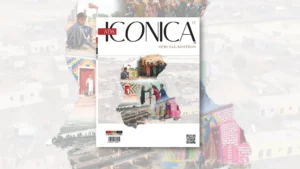
In parallel with the forum, ADA released its 77th Edition, a special issue dedicated to Climate-Resilient Settlements in the aftermath of Pakistan’s devastating 2022 floods.
Developed in collaboration with Catholic Relief Services and partners across government, institutions, and communities, the edition documents recovery models that move beyond reconstruction. At its core is CRSDP-SCALE, a community-led framework integrating climate adaptation, risk reduction, and low-emission development into settlement design.
As one of the world’s most climate-vulnerable nations, Pakistan’s rebuilding narrative demands structural reform, inclusive governance, and resilient design thinking. Through dialogue at APSSF 2026 and through this special edition, ADA remains committed to advancing architecture that responds not only to crisis but to the future.